 ← Works
03 · Bench
선
SEON
line — a single unbroken form
선 (seon) is line. In Korean art and calligraphy, a single brushstroke — one continuous line drawn without lifting the brush — is considered the most difficult and most revealing expression. It cannot be corrected. It cannot be composed from parts. It is one thing, complete.
A bench is the most linear piece of furniture. It has length. It has depth. It has height. Beyond those three dimensions, a bench that is doing its job correctly has nothing else. The Seon is the reduction of seating to its simplest possible expression — a horizontal surface held at the correct height, in material that earns its presence in the room.
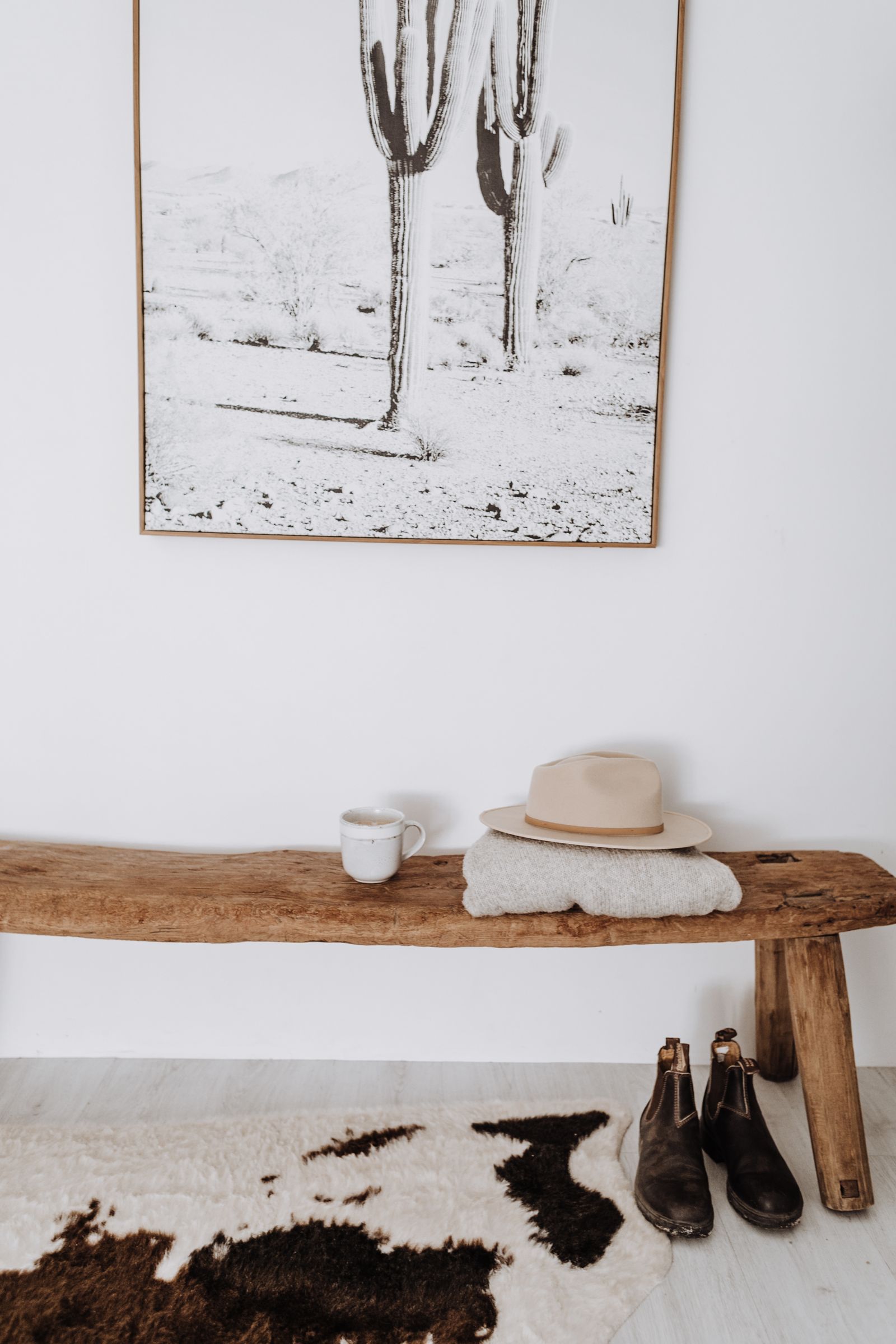
The Seon is designed for three positions in a Bangkok home. At the foot of a bed — where it provides a surface for dressing, a place to sit briefly, a visual anchor to the frame behind it. At an entry — where it gives arrival a place to happen. Against a wall in a dining space — as secondary seating, a surface for objects, or simply a presence that gives the room more dimension than chairs alone.
In each position, the length of the Seon is different. A bed-end bench is typically 10 to 20cm shorter than the bed is wide — so it sits centred without touching the bedside tables. An entry bench is typically 60 to 100cm — the length of a deliberate pause. A dining bench replaces or supplements chairs on one side of a table, and its length is derived from how many people it needs to seat.
The Seon's seat surface is either solid wood or upholstered. A solid wood seat — particularly walnut or smoked oak — has a formality that works at a bed end or in a more architectural entry. An upholstered seat — in linen, boucle, or leather — is softer in character and warmer. In a bedroom, the upholstered version extends the room's material palette into the floor zone. In an entry, the solid wood reads as more deliberate.
The legs are the line beneath the line. Simple tapered wood legs, or flat-bar steel, or a solid plinth — each changes the bench's relationship to the floor. Steel legs make it float. Wood legs make it feel rooted. A plinth makes it architectural. We choose after seeing the floor material and what surrounds the bench.
The Seon's most important design principle is restraint. A bench that does more — that adds storage, or arms, or back support — is no longer a bench. It is a different piece. The Seon does one thing: it provides a surface at seating height. The space above it, around it, and under it is as important as the bench itself. 선 — line — is only meaningful because of the space it passes through.
From
฿45,000
Solid wood · upholstered option
Lead Time
6–8 weeksfrom confirmed brief
Seat Options
Solid walnut · Solid oak · Upholstered (linen / boucle / leather)
Base Options
Tapered wood legs · Flat-bar steel · Solid plinth
Length
Custom to your space — typically 60cm to 200cm